
Scott County Arrest Records and Court Charges
Scott County arrest records are tied to the law-enforcement and jail side of a case. They may reflect that a person was arrested, booked, or held, and the Scott County Detention Center states on its inmate lookup page that criminal charges should not be confused with convictions. Many people are charged without being convicted, and the arrest record can remain an active public record even before the court reaches a final result.
Court charge records begin when the accusation is filed or tracked in court. That may happen through a citation, complaint, information, or indictment. The charge record shows what the prosecutor or grand jury has placed before the court, how each charge is classified, whether it has been amended or dismissed, and whether it ends in conviction, acquittal, diversion, dismissal, or another disposition. Custody and booking details belong with jail records, while the full case file and sentencing belong with Scott County criminal court records.
The Scott County Detention Center inmate lookup page is the official jail starting point for custody-related arrest information.

The inmate lookup source is relevant to arrest records because it is the county jail's public path for custody information, not the full court case result.
Find Scott County Arrest Records and Charges
Use the access channel that matches the question. If the question is whether someone is in custody, start with the Scott County Detention Center online lookup or call the jail. If the question is what charges were filed in court, use KYeCourts public case access and the Scott County Circuit Court Clerk. If the question is about an incident report, agency report, or law-enforcement record not shown online, use the agency that controls the record, such as the Sheriff's Office, Georgetown Police, or the county open-records process.
- Check the official Scott County Detention Center inmate lookup for current county custody information.
- Search KYeCourts guest access by defendant name, case number, or citation number for filed court charges.
- Read each charge separately, including code, level, status, disposition, and sentence if shown.
- Call the Scott County Circuit Court Clerk when copies, older records, or charge-status verification are needed.
- Use the Sheriff's Office, Georgetown Police, or county open-records channel for agency records that are not court files.
The Scott County inmate services page gives bond and release rules that often matter after an arrest, including cash bonds at the jail and property bonds through the Circuit Clerk.

Bond information connects arrest records to court charges because release terms may appear in the court case while payment or posting rules may be handled at the jail or clerk.
Charges After Arrest in Scott County
After an arrest, the court charge record depends on the charging document and court level. District Court handles misdemeanors, violations, traffic offenses, felony arraignments, and probable-cause hearings. Circuit Court handles felony prosecutions after the case moves forward. In Kentucky, a County Attorney may handle misdemeanor, traffic, juvenile, child-support, and county-level prosecution functions, while felony prosecutions are handled by Commonwealth's Attorneys. Scott County is in the 14th Judicial Circuit.
| Document | Who Uses It | What It Does | Scott County Context |
|---|---|---|---|
| Complaint | Officer or prosecutor path | States an accusation and can support the start of a criminal case. | Often tied to District Court first appearances or lower-level matters. |
| Information | Prosecutor | Formal charging document used by a prosecutor in some criminal matters. | May be part of felony or negotiated case processing. |
| Indictment | Grand jury | Formal felony charging document returned after grand-jury action. | Moves serious felony prosecution into Circuit Court record flow. |
| Citation | Officer | Written charge or summons, often for traffic or lower-level offenses. | Can create a District Court docket and payment or court-date obligation. |
The document type does not prove guilt. It tells the court and the defendant what accusation is being pursued. The later docket and disposition tell whether the charge was amended, dismissed, reduced, diverted, tried, or resolved by plea.
Scott County Charge Status Terms
Charge status can change several times. A person may be arrested on one stated charge, appear in District Court, then have the charge amended or replaced after prosecutor review. A felony may move from District Court to Circuit Court. A misdemeanor may remain in District Court and later be dismissed, pled, diverted, or sentenced. Read the most recent docket entries before relying on a charge label.
| Status | What It Means | What To Check |
|---|---|---|
| Pending | The charge has not reached final disposition. | Next hearing, bond status, and any pending motions. |
| Amended | The charge was changed from its earlier form. | Old and new charge labels, level, statute, and date of amendment. |
| Reduced | The charge level or offense was lowered. | Plea terms, prosecutor entry, and final disposition. |
| Dismissed | The charge ended without conviction on that count. | Whether dismissal was with or without conditions and whether other counts remain. |
| Diverted | The case follows court-approved terms that may avoid conviction if completed. | Program terms, completion status, and final court order. |
| Convicted | A guilty plea or guilty finding was entered. | Sentence, probation, fines, costs, restitution, and appeal status. |
Scott County court records may show multiple charges with different statuses in the same case. Do not treat one dismissed count as dismissal of the whole case unless the docket confirms that result.
Scott County Arrest Record Sources
The Scott County Sheriff's Office and Georgetown Police Department are law-enforcement sources, while the jail and court clerk handle different record categories. The Sheriff's Office site identifies Jeremy Nettles as Scott County Sheriff and says the office provides service 24 hours a day, seven days a week. Georgetown Police provides city police channels, including a crime-tip page and mobile app options. These tools support tips and agency contact, but research did not verify an official public warrant or arrest-search database inside those apps.
The Scott County Sheriff's Office homepage is the official source for sheriff contact and law-enforcement context.
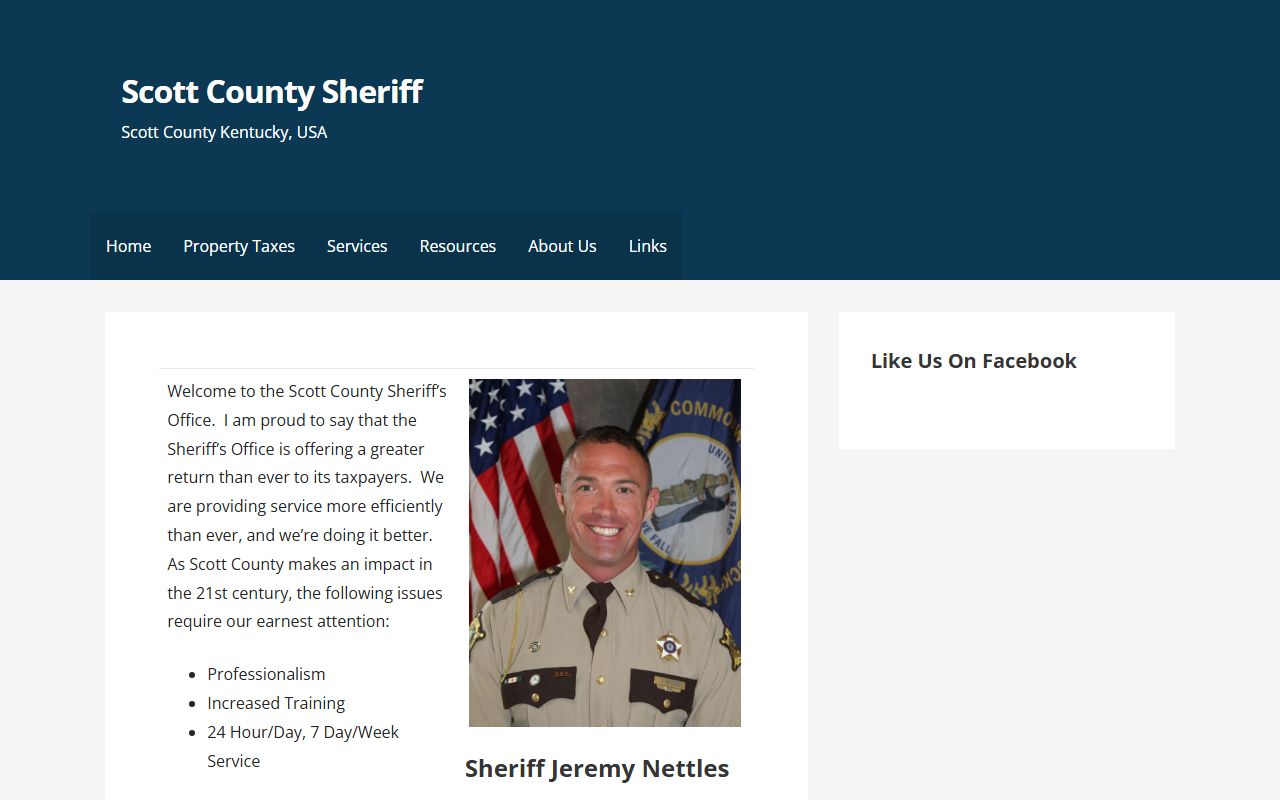
The sheriff source helps identify the law-enforcement office, but filed court charges still need the court search or Circuit Court Clerk.
The Sheriff's Office mission page describes local law-enforcement service and mission details.
Mission and service information can orient an arrest-record request, but it does not replace a court docket or prosecutor-filed charge record.
Scott County Charges vs Convictions
The central rule is simple: a charge is not a conviction. An arrest record may list charges at booking. A court case may list charges as filed. Later docket entries may show that a charge was amended, reduced, dismissed, diverted, or resolved by guilty plea or trial. A final conviction requires a guilty plea, guilty verdict, or other formal guilty finding for that count.
| Point | Charge | Conviction |
|---|---|---|
| Meaning | An accusation tied to an arrest, citation, complaint, information, or indictment. | A formal guilty outcome entered by the court. |
| Where it appears | Jail lookup, citation, complaint, docket, or charging document. | Disposition, judgment, sentence, or final docket entry. |
| Can change | Yes, charges can be amended, reduced, or dismissed. | Later relief may occur through appeal, vacation, or expungement if allowed. |
| How to verify | Check the most recent court docket and charge status. | Confirm the judgment, sentence, and expungement status with official sources. |
Scott County Prosecutors and Defense
The title District Attorney does not fit Scott County. Kentucky uses County Attorneys and Commonwealth's Attorneys. The Scott County Attorney handles misdemeanor, traffic, juvenile, child-support, and county-level prosecution functions. The official office site identifies Cam Culbertson as Scott County Attorney. Felony prosecutions are handled by Commonwealth's Attorneys in the 14th Judicial Circuit. The court record remains with the Circuit Court Clerk even when the charging decision comes from a prosecutor.
Public defense is handled through the Kentucky Department of Public Advocacy. The Georgetown Trial Office serves Bourbon, Scott, and Woodford counties, with Directing Attorney Brad Gordon listed in the research file. Public defender information may appear in a criminal case as counsel of record, but public defense offices are not public-records counters for arrest records or charge copies.
The Georgetown Police crime-tip page identifies local tip and police app options for city law-enforcement contact.
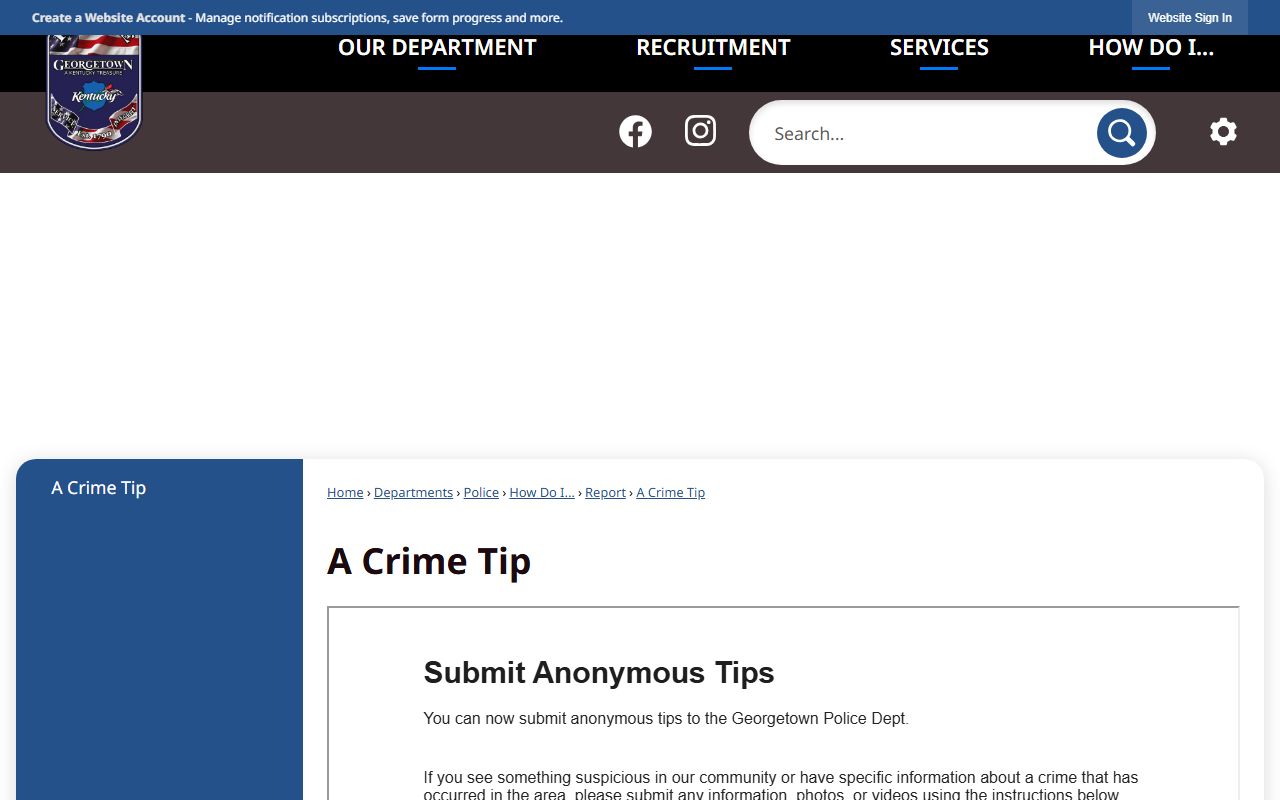
The crime-tip source is relevant for reporting information to Georgetown Police, but it is not a public court-charge lookup or proof of conviction.
Statewide Charge Record Channels
Statewide criminal history and local case lookup are different channels. KYeCourts public access can show public case information. The Kentucky AOC criminal record report process is separate and may be used when a formal criminal record report is needed. Kentucky Online Offender Lookup is for sentenced state prison custody and correctional supervision, not a county arrest or current court-charge database. The Scott County Detention Center jail lookup is the county custody path.
Agency records also differ from court records. County open-records requests go through Scott County government for county-controlled records. Georgetown city open-records requests use the city process. Court case files use Kentucky Court of Justice channels. A request sent to the wrong office can slow the search, even when all offices are in or near downtown Georgetown.
Scott County Sealed and Expunged Charges
Sealed, juvenile, and expunged charges require caution. Juvenile records are restricted under KRS 610.320 and KRS 610.340. KRS 431.079 defines expungement for Kentucky criminal-record statutes as removal or deletion so the matter does not appear on official state-performed background checks. KRS 431.073 sets a path for certain felony convictions to be vacated and expunged when eligibility and payment rules are met.
| Point | Sealed Charge | Expunged Charge |
|---|---|---|
| Public access | Blocked from ordinary public search by law or court order. | Removed or deleted from official public criminal-record reporting as ordered. |
| Common examples | Juvenile, protected, sensitive, or court-sealed records. | Eligible dismissed, acquitted, or conviction records after Kentucky process. |
| How to confirm | Ask the court clerk or counsel about access limits. | Use the court order and official expungement process, not old web copies. |
Restricted Scott County Charge Records
Not every arrest or charge detail is public. Active investigations, search warrants, sealed warrants, juvenile matters, mental-health records, medical records, protected addresses, victim-sensitive information, and sealed filings may be withheld or redacted. A public jail roster or court docket may also omit details that exist in the full agency file or court file. If a matter involves a minor, domestic violence, confidential informants, mental-health proceedings, or expungement, expect limits.
For official copies of court charges, use the Scott County Circuit Court Clerk. For custody confirmation, use the Scott County Detention Center. For sheriff records, use the Sheriff's Office. For Georgetown police records, use the city process. Keeping those channels separate is the safest way to avoid mixing an arrest record, a charge record, and a conviction record.
Important: A Scott County arrest or filed charge should not be described as a conviction unless the court disposition confirms it.